

Updated: 04-Feb-2026
This company was founded in 1896 by Joseph Walter to build motorcycles and automobiles.
-Motorcycles were launched in 1911, and the first car, the W1, was produced in 1913. The company continued operating until 1954, when it built its last car as AS Walter Cars and Aero Engines (AS Walter Tovarnyca na Automobily a Letecke Motory).
-It was also known as “Akciová Továma na Automobily a Letecké Motory J. Walter Praha”.
“Logo Walter”
-However, it achieved worldwide fame and recognition for its aircraft engines.
-Aviation engine production began in 1923 with the NZ-60, a 60-75 hp, five-cylinder radial engine, and the NZ-45, a three-cylinder radial engine.
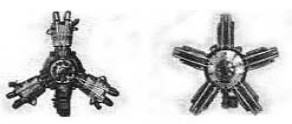
“Walter NZ 40 and NZ-60”
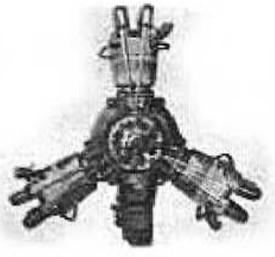
“Enlarged view of the NZ-40 II”
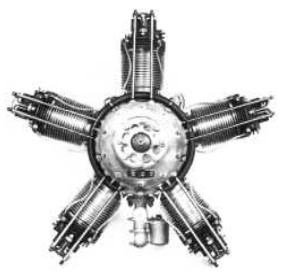
“NZ-60”
-These engines were designed by Novak and Zeithaml as the NZ series. The 5-cylinder radial NZ-70, the 7-cylinder radial NZ-85, and the 9-cylinder radial NZ-120 were also produced.
-We have a better view of the NZ-60, taken from Appendix 7, a frontal view, and another of an installation on a low-wing light aircraft.
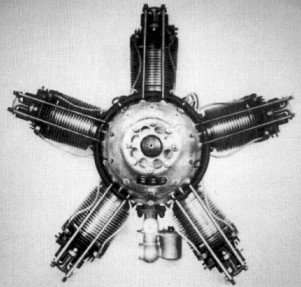
“Walter NZ-60”
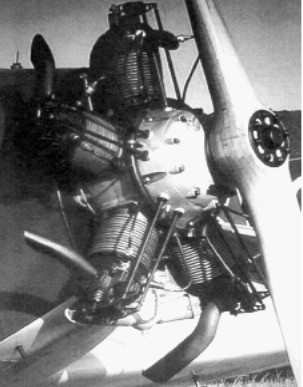
“NZ-60”
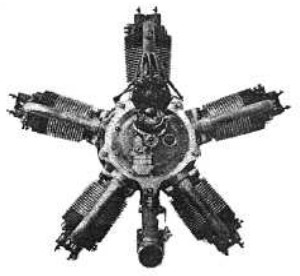
“NZ-70, rear view”
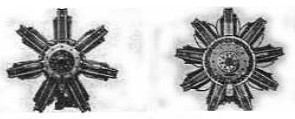
“Reduced photos of the NZ-85 and NZ-120”
-While manufacturing these engines, they also produced engines under license, starting with the BMW III and IV between 1923 and 1925.
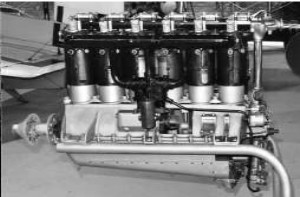
“BMW-IIIa in a Czech Museum”
-The BMW IV produced 240 hp at 1,400 rpm and 180 hp (takeoff) at 1,450 rpm. It was known as the Walter W-IV.

“Walter W-IV”
-The highest compression version of the BMW W-IV was the W-300, which reached 300 hp at 1,400 rpm.
-The DH Gipsy Six was also produced under license, as was the 85 hp Pobjoy “R,” which Walter called the “Mira.”
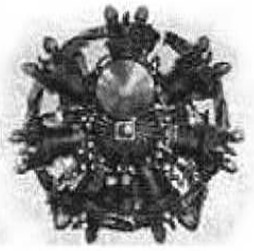
“Walter -Pobjoy Mira”
-The Walter A was built as an inverted twin-cylinder, two-stroke, air-cooled engine of unusual design. It produced 22 hp.
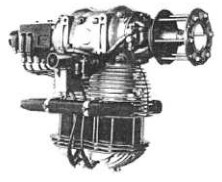
“Walter tipo A”
-For smaller power outputs, Walter would build opposed-cylinder engines, as we will see later.
-It should be noted that a 250cc Jawa motorcycle from the Czech Republic was also adapted by Walter.
Between 1920 and 1930, several families of radial engines were developed based on the NZ engines.
These were the Polaris engines, based on the NZ-45, which had three cylinders because the NZ-45 suffered from vibrations that were eliminated in the Polaris. The Polaris II produced 78 hp at 2,480 rpm.
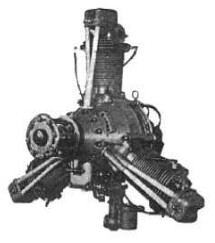
“Walter Polaris II”
The Castor engines had seven cylinders, except for the "Super Castor," which had nine. The Castor produced 240 hp at 1,750 rpm, and the Castor II produced 260 hp at 1,800 rpm. This was in 1932.
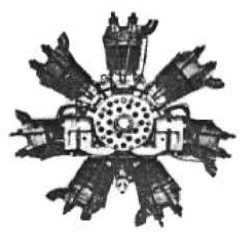
“Castor with front magnetos”
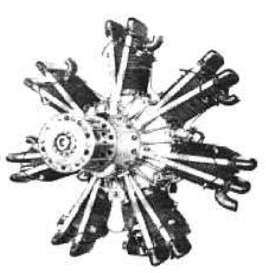
“Castor II, enlarged”
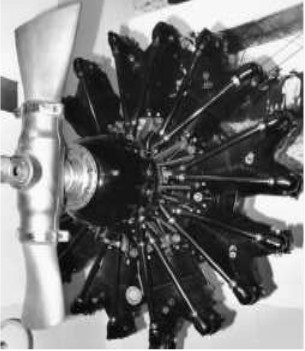
“Super Castor II-MR”
-The Super Castor, with nine cylinders, produced around 430 hp at 2,200 rpm.
-There were I-MR and II-MR versions, with a reduction gear. Like the II-MR in the photograph, on display at a Czech museum.
-The Vega began production in the late 1920s, with 85/90 hp. It was available in Vega and Vega I variants, with five radial cylinders.
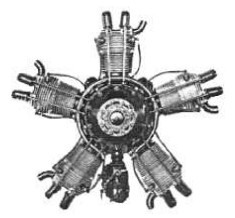
“Walter Vega”
-The Vega family includes the Venus with 7 cylinders and the Mars with 9.
-Derivatives of the Venus engine were made, such as the Venus I. The standard Venus produced 110 hp.
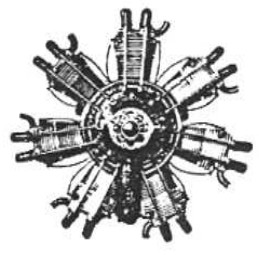
“Walter Venus I”
-The Venus has the same cylinder capacity as the Vega. This family was designed by F. Nusl around 1930.
-It certainly appears to be a redesigned and improved version of the NZ-85.
-At this time, AS Walter already had 10 years of experience building aircraft engines and many more in automobile engines.
-The 7-cylinder Venus I radial engine produced 115 hp at sea level, with a compression ratio of 6.3:1.
-The Mars, from the Vega and Venus family, had 9 cylinders and 145 hp at 1,750 rpm.
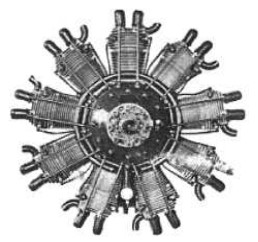
“Walter Mars”
-Interestingly, we have a “Mars” engine on display at the Czech Museum. According to the plaque at its base, it reads: Walter Mars 14 I-SR, 550/630 hp.
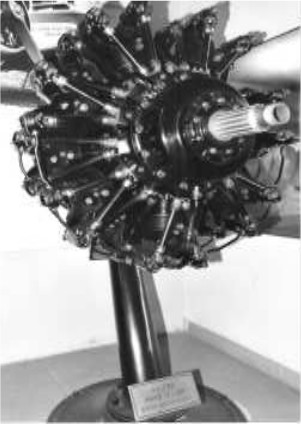
“Walter Mars 14 I-SR”
-The American Packard produced a 225 hp radial diesel engine as an attempt to create engines operating on that cycle.
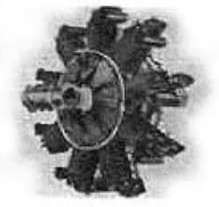
“Walter-Packard Diesel”
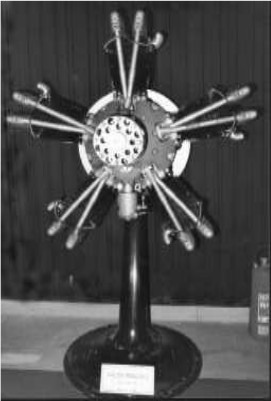
“Regulus II”
-The one shown is located at the Aviation Museum in Prague.
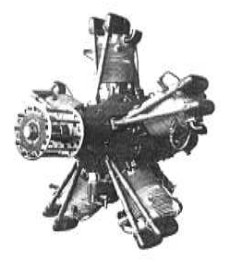
“Another view of the Regulus II”
-In 1931, the nine-cylinder Atlas engine, producing 600 hp at 1,900 rpm, appeared, although it did not enter production.
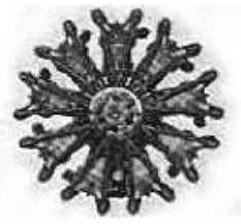
“Walter Atlas”
The following year, another nine-cylinder engine was the Pollux, which used the same cylinders and certain parts as the Castor and produced 320 hp at 1,900 rpm.
-The Pollux II produced 340 hp at 1,800 rpm.
-The Pollux IIR, with a reduction gear, reached 360 hp at 2,070 rpm.
-The Pollux III and IIIR, with and without a reduction gear, produced 420 hp at 2,000 rpm.
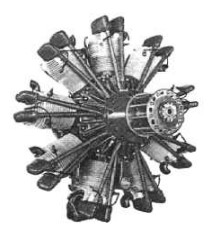
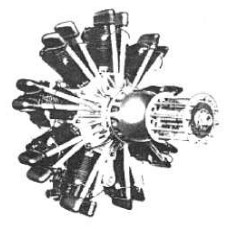
“Pollux II and II-R”
-The 9-cylinder Gemma engines shared the same cylinder configuration as the Bora and the 9-cylinder Scolar. This formed another line of radial engines.
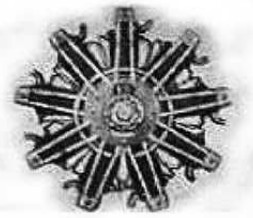
“Walter Gemma”
-The Gemma produced 150 hp at 1,785 rpm.
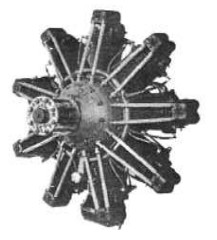
“Walter Gemma I”
-Now we move on to the Walter Bora engines, producing 200 hp at 2,300 rpm.
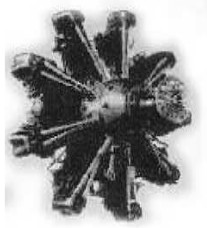
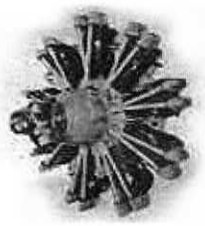
“Walter Bora and Bora II”
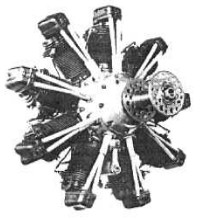
“Clearer photo of the Bora”
-Now we come to the Scolar, from 1936, which produced 160 hp at 2,200 rpm.
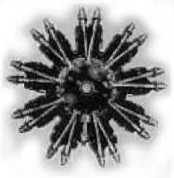
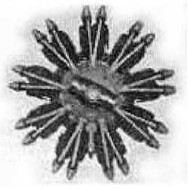
“Walter Scolar and Scolar I”
-The Scolar engine was a 9-cylinder engine, and although its power output was 160 hp, at takeoff it delivered 180 hp at 2,500 rpm.
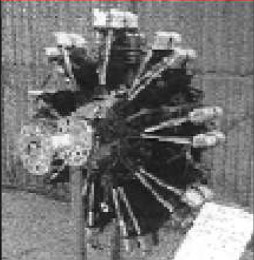
“Scolar at the Kosice Museum, photo K. Pankuch”
-There were other engines about which information is currently lacking, such as the 55 hp Palasis engine installed on the Letov S39.
-And the 18 kW Trojan engine installed on the Nagel. Or the 120 hp M-108H with six horizontally opposed cylinders.
-Let's look at inline engines now. And we'll start with the Mikron, from the late 1920s.
The Walter brand was very popular, and its engines were very famous. For example, the Mikron was built under license in several countries, including Yugoslavia, Poland, Spain, Italy, and France, and was used in many other countries as well.
In 1981, they were manufactured again by the Czech company Aerotechnik (see).
And now by Parma-Technik, its successor (see).
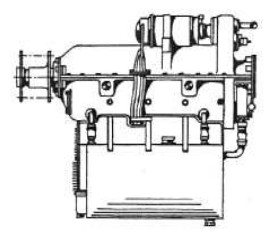
“Drawing of the Walter Mikron”
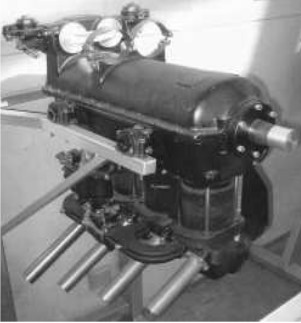
“Walter Mikron at the Munich Museum”
As we can see in the Mikron 4-II engine at the Munich Museum, the two magnetos above the engine are missing. It was built by Walter AS in Prague-Janonice around 1936. It produced 62 hp at 2,800 rpm with a displacement of 2.33 liters.
Another Walter engine of the same type, this one at the Brussels Museum, is shown below.
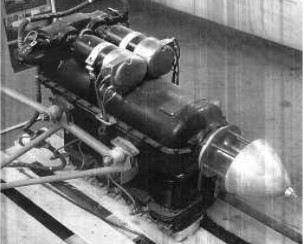
“Mikron at the Brussels Museum”
-The Walter Mikron in Brussels has the magnetos installed, but the intake manifold, carburetor, and exhaust are missing. (Editor's note: Could both museums coordinate and complete one?)
-The Mikron I produced 65 hp, with four inverted cylinders. The Mikron II (4/II) produced between 62 and 75 hp depending on the application.
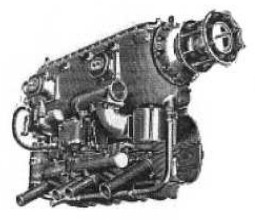
“Walter Mikron III”
-The Walter Mikron III produced 65 hp at 2,600 rpm, and a derivative of this was the Walter Mikron 4-III with 105 hp.
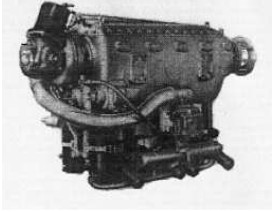
“Mikron 4, 105 CV”
-We can see that the magnetos have changed position, a change that will be maintained in the other engines of the range.
-Also note that the power output of the Mikron, Junior, and Minor engines led to the gradual displacement of low-power radial engines starting in 1929. Inline engines have survived to this day in touring, training, and aerobatic aircraft, as mentioned, and are even used by the air forces of many countries.
-While Mikron engines are currently manufactured by Parma Technik, the 4- and 6-cylinder Walter Minor series are now built by LOM in the Czech Republic. See.
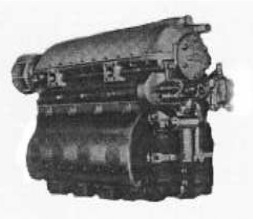
“Mikron III”
-Below is a nice photograph of the Walter Mikron or Mikron II, with magnetos at the top.
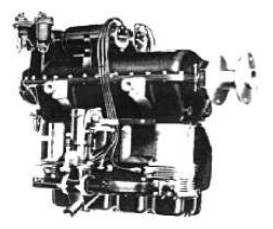
“Walter Mikron”
-In 1932, the Junior, producing 105 hp at 2,000 rpm, appeared on the market and was considered a step towards the Minor.
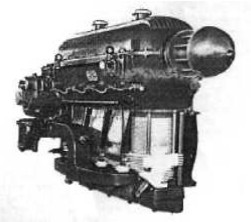
“Walter Junior”
-The Walter Junior engines proved to be somewhat heavy for their power output.
-The Walter Junior and Junior 4-I engines were not significantly different from the 4-cylinder Minor engines that would be produced later (from 1935 onward). They produced 112 hp at 2,200 rpm and 121 hp at 2,300 rpm.
-The Junior Major typically reached 120 hp.

“Walter Junior 4-I”
-The Minor engines, similar to the Junior engines, appeared, as mentioned, from 1935 onward. Originally with 75/85 hp, they quickly rose to 85/95 hp. They had four cylinders.
-The Minor 6, a six-cylinder engine producing 140 hp at 2,300 rpm, soon followed.
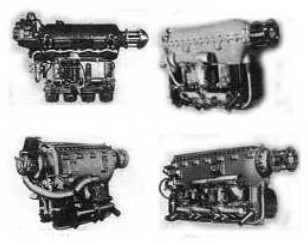
“Four Walter Minor engines"
-Top left – and very similar to the Junior 4-I – is the Minor 4-I. It differs in the naturally aspirated crankcase, the position of the magnetos and accessories, and the fuel system, manifold, etc. Even so, at first glance they can be confused.
-Top right is a Minor 4-III. Bottom left is the same model supercharged.
-And bottom right, a 6-III.
-Another view of a 105 hp Minor 4-III is shown.
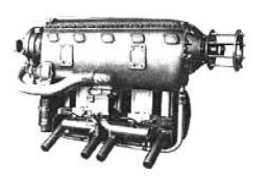
“Walter Minor 4-III”
-The Minor 4-III series was officially tested between January 17 and February 12, 1946. It was equipped with a Walter 45 carburetor and two Vertex-Scintilla magnetos.
-All Walter engines were widely used by airframe manufacturers such as Avia, Sokol, Zlin, etc.
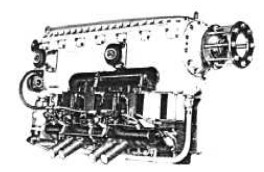
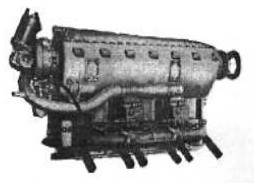
“Two Walter Minor 6-III”
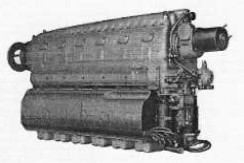
“Another Walter Minor 6-III”
-There were also the Major 4 and 6. All of them share a similar architecture, as do the following engines with the initials M-, which we show below.
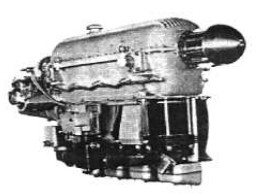
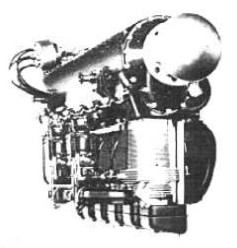
“Majors 4 and 6”
-The Major 4 was a four-cylinder engine that gave around 120/130 hp. The Major 6, with six cylinders, reached 195/205 hp.
-The Major engines were developed in 1934/35 by enlarging the Minor engines, which were beginning their production at the same time. Both engines were robust and powerful.
-The Sagitta, from 1936, is very interesting. It was an inverted, air-cooled V12 that produced around 540 hp in the case of the Sagitta I-SR (supercharged and with a reduction gear).
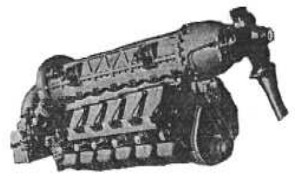
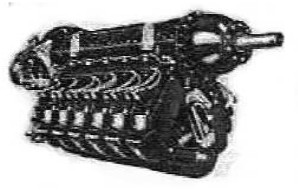
“Dos Sagittas”
-The reduction gear was optional and derived from the little-known Minor 12. Presented at the 1938 Paris Motor Show, the Minor 12 I-MR was a pleasant surprise due to its small size and respectable power output, although only 400 hp without forced induction and at 2,200 meters, rotating at 2,750 rpm.
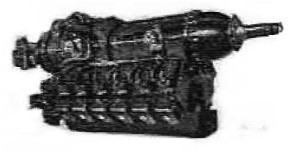
“Minor 12 I-MR”
-An interesting and small twin-cylinder engine with low power, 25 hp at 2,800 rpm, was the Atom. It reached 28 hp at 3,000 rpm.
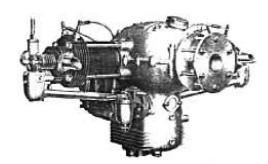
“Walter Atom”
-At this point, we arrive at the WWII era, when, due to the annexation of Czechoslovakia by Germany, Avia, Skoda, Walter, etc., adapted to the production of engines for the Axis powers.
-The Sagitta and Minor 12 engines saw their development halted by the war.
-The Germans prioritized the manufacture of Argus engines. Production of the BMW 003A was also initiated. The Bramo Fafnir 223 and 523 engines were also produced.
-WWII ended with Walter's facilities relatively undamaged. Meanwhile, the company began developing its own M-01 turbine. However, production of the Mikron and Minor engines continued for a few more years.
-Between 1946 and 1949, Walter AS was nationalized, becoming the state-owned MotorletNP.
-Around 1950, production of the M-05 engine, a licensed copy of the Soviet RD-45 engine, began. These engines were intended to power the MiG-15. Czechoslovakia was under Soviet influence.
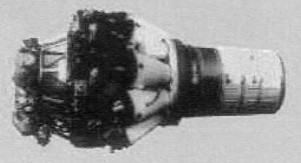
“Walter M-05”
-The M-06, derived from the Soviet VK-1, was subsequently produced under license. By 1962, more than 5,000 jets of these two types had been built.
-At the same time, the Ivchenko AI-14 radial engines were produced under license in the -R, -F, and -VF variants (the latter as the M-460). The Shvetsov AS-82V and M-360RF engines were also produced.
-The production of small engines for sport and general aviation continued.
-There was the 40 hp MC-101, as well as the 220-230 hp W-IV V8.
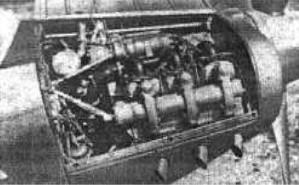
“Walter-Praga B Doris”
-The M-108H had six horizontal cylinders. The M-107 was made. The DR -Doris- as the M-208. Or the M-21.
-The M-110 engines are very beautiful, as displayed in the Prague Museum.
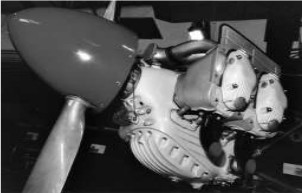
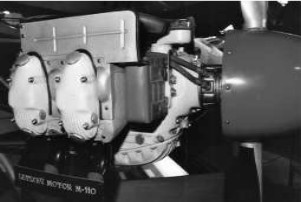
“Walter M-110”
-The 4- and 6-cylinder Minor series overlapped with the Major and the M-137, M-337, along with the M-132 and M-332. These latter, derived from the earlier ones that began before the war, were reissued and updated.
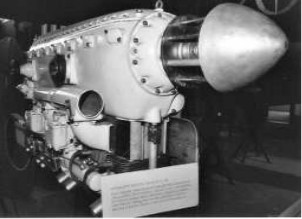
“Walter Minor 6-III”
-In 1956, Walter began production of the 6-III (which we would see on the Zlin Akrobat and Trener Master aircraft). In the illustration above, we see the 6-III with two carburetors for its six cylinders.
-In 1958, the new M-332 was released with four cylinders and a displacement of almost four liters. It produced 140 hp. Nearly 1,200 units of this engine were manufactured. It was derived from the M-132.
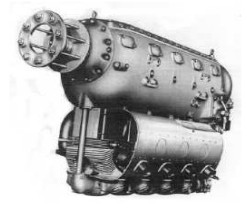
“M-332 from 1958”
-The M-337, itself derived from the M-137, featured an injection system, as evidenced by the absence of carburetors and the presence of fuel lines leading to the injectors in each intake manifold.

“Zlin Akrobat Engine”
-Nearly 1,200 M-337 engines were produced. It began its life in 1959, but remember that these engines from the 1950s are based on models from the 1930s.
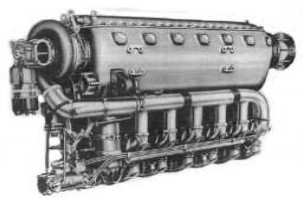
“Walter M-337”
-In 1964, piston engine production was transferred to AVIA. And today, the 4- and 6-cylinder Minor engines are made at LOM (see). The Mikron engines are made at Parma-Technik.
-Note: In 1995, Motorlet reverted to being Walter AS, manufacturing both piston and turbine engine lines, as we will see now.
-In 1960, another beautiful engine was launched, the M-701, with a single-sided active centrifugal compressor, separate combustion chambers, etc., in the same style as the first turbojets of the 1940s.
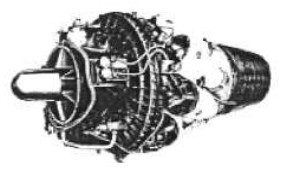
“Motorlet-Walter M-701”
-The M-701 was designed for the Dolfin L-29, a military training aircraft. The AI-25TL was developed for the more modern L-39Z by Ivchenko.
-The AI-25TL is the Walter-Titan turbofan, a Russian-licensed design with 3,790 lb of thrust.
-In 1961, a famous turboprop from the same manufacturer appeared: the Walter M-601 (manufactured by Motorlet) and curiously, with an architecture similar to the PWC PT-6 (or vice versa).
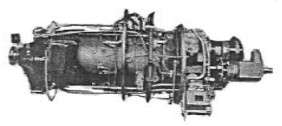
“M-601”
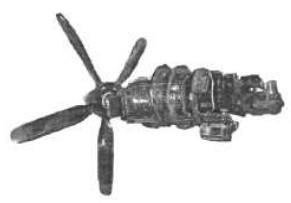
“Walter M-601”
-Power increased to 690 shp in the M-601B, 725 hp in the M-601D, and 750 shp in the M-601E. The M-601F increased to 780 shp, while the M-602 more than doubled the power. It was also larger.
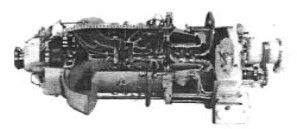
“M-602”
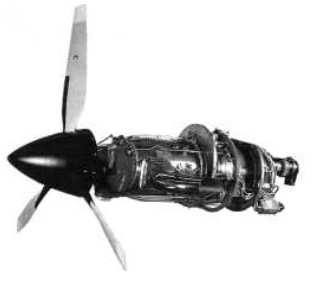
“Motor Walter 602”
-Finally, we should mention the small, twin-cylinder M-202 engine, producing 65 hp at 6,300 rpm. It has been manufactured from 1995 to the present day. With single ignition and a 0.373:1 reduction gear, it is used in many Czech ultralight aircraft.
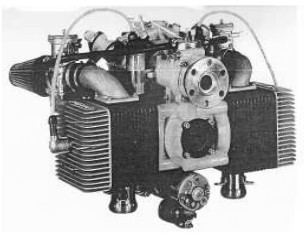
“M-202”
-In 2007, General Electric reportedly made moves to acquire Walter Engines, as it is now known.
- Photos and text planned for a future revision of this chapter's text are now being added.
- Below are some models mentioned but for which illustrations were not available at the time.
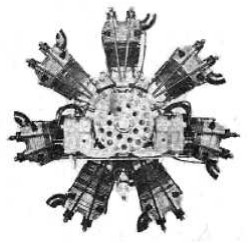
“Castor I”
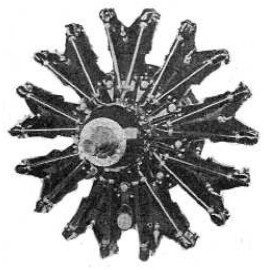
“Walter Super Castor”
- The Super Castor produced 400 hp at 2,200 rpm and 13,500 feet. It reached 430 hp at 2,400 rpm.
- The Super Castor I reached 460 hp at 2,200 rpm.
- The Super Castor was seen in SR, MR, and even IMR versions.
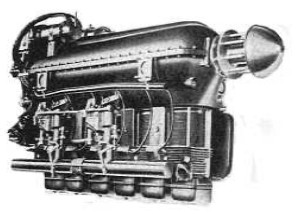
“Walter Minor 6-I”
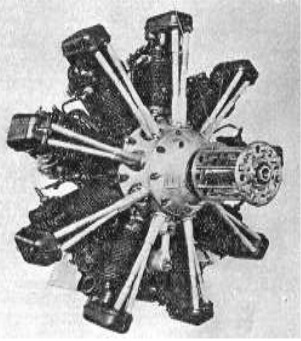
“Motor Walter Bora”
- Bora engine for touring aircraft, 200/220 hp depending on whether it was at 2,150 rpm or 2,300 rpm.
- The Walter Sagitta IRC with a supercharger produced 500 hp at 2,400 rpm and 1,600 meters altitude.
- At 2000 meters altitude, it could produce 520 hp.

“Salmson Sagitta IRC”
- A “Walter 120” recently arrived at the MAE Engine Reserve Warehouse is shown below.
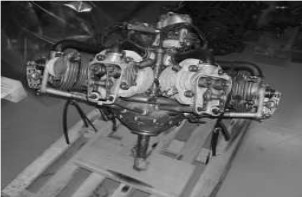
“Walter 9-cylinder”
- Possibly the NZ-120, but missing the rocker arm covers.
From Appendix 9: My collaborator Evzen sent me some photos of the Walter factory (Czechoslovakia at that time). The first image shows a view of the export room. Enlarging the photograph, we see that the crate on the left is destined for Italy, specifically the Breda factory.
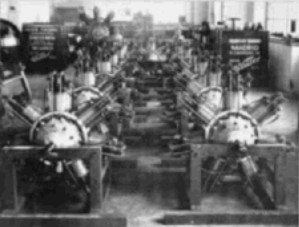
"Engine Dispatch Room"
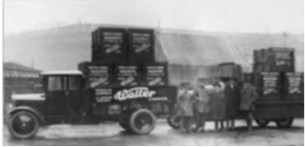
"Loaded trucks leaving"
-A four-cylinder Minor 4-III as displayed in Brno.
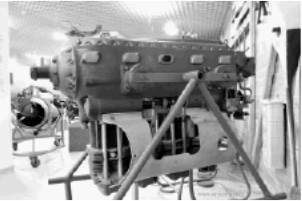
“Minor 4-III”
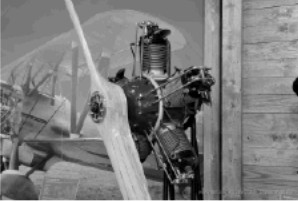
“Walter NZ-60”
-And a list in chronological order.
-1923, the 280 hp W-IV is produced under license from BMW.

“Walter W-IV”
-1924. The Walter W-IIIa is released. 200 hp and 6 cylinders in line.
-1923. The NZ-60 radial, 5 cylinders giving 75 hp.
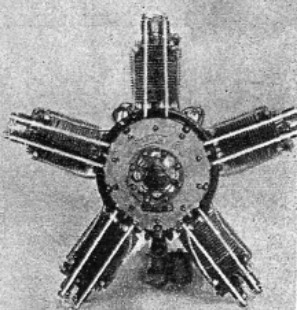
“Walter NZ-60”
-1926. The 100 hp NZ-85. 7 cylinders.
-1927. The NZ-120, a nine-cylinder radial engine.

“Walter NZ-85”
-1927. The Jupiter IV (580 hp) and VI (543 hp) are produced under Bristol license.
-1928. The 7-cylinder radial Castor, 260 hp.
-1932. The Castor II, with 340 hp and the same number of cylinders.
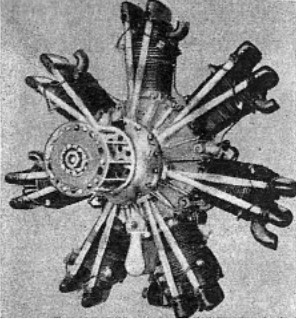
“Walter Castor II”
-1929. The Vega, a 5-cylinder engine, 90 hp.
-1929. The Venus, a 7-cylinder engine, 115 hp.
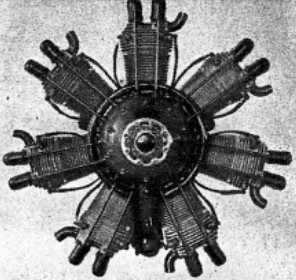
“Walter Venus”
-1929. The Mars, a 9-cylinder radial engine, 155 hp.
-1930. Walter IV, 12-cylinder V engine, 460 hp.
-1930. Walter VI, 12-cylinder V engine, 620 hp.
-1930. Walter VII-R, also 12-cylinder V engine, 750 hp.
-1930. The Walter VIII, a Fiat-licensed 12-cylinder V engine, 1000 hp.
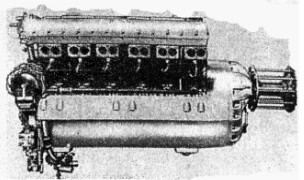
“Walter VIII (Fiat)”
-1931. Walter Regulus, 5-cylinder radial engine, 230 hp.
-1931. Walter Atlas, 9-cylinder radial engine, 650 hp.
-1932. Walter Polaris II, 3-cylinder radial engine, only 78 hp.
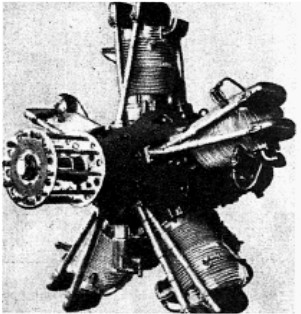
“Walter Regulus II"
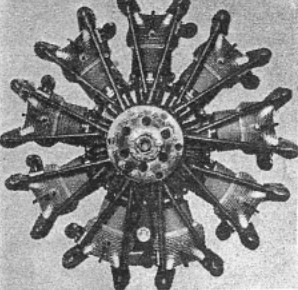
“Walter Atlas”
-1932. The Walter Pollux, 380 hp. 9 radial cylinders.
-1935. The Pollux II-R, 9 cylinders. 480 hp.
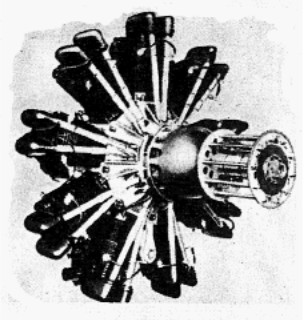
“Walter Pollux II-R”
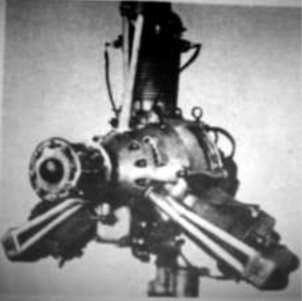
“Walter Polaris”
-1931. The Walter Regulus, 5 radial cylinders, 230 hp.
-1932. Walter Junior, 4 inverted inline cylinders, 120 hp.
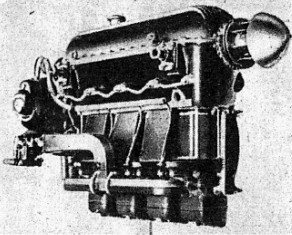 <
<
“Walter Junior”
-1932. Walter Pegas (Bristol license). Model II-M2, 580 hp.
-1932. Walter Gemma, with 9 radial cylinders and 170 hp.
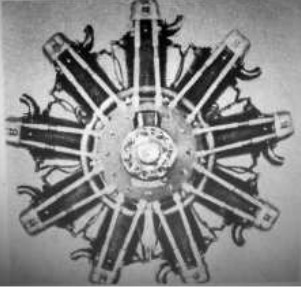
“Walter Gemma”
-1932. The Castor II, 7 radial cylinders, 320 hp, is released.
-1934. The Bora with a 9-cylinder radial engine and 220 hp.
-1935. Bora II-R with 245 hp.
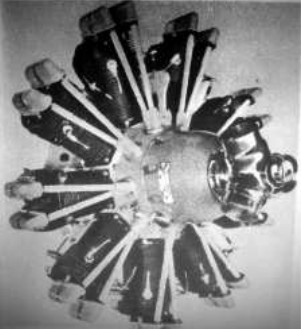
“Walter Bora II”
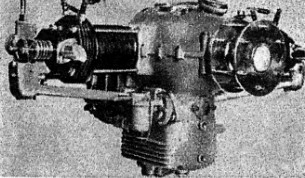
“Walter Atom”
-1935. Walter Atom with a 2-cylinder boxer engine and 28 hp at 3000 rpm.
-1934. Major 4, with an inverted inline 4-cylinder engine and 130 hp.
-1934. Walter Mikron II, with an inverted inline 4-cylinder engine and 62 hp.
-1934. Walter Minor 4, with an inverted inline 4-cylinder engine and 95 hp.
-1935. Walter K-14 I, a Gnome-LeRhone license.
-1936. Minor 6, with an inverted inline 6-cylinder engine and 155 hp at 2600 rpm.
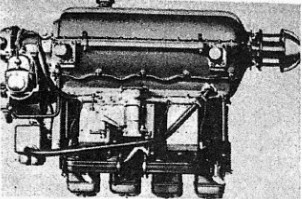
“Walter Major 4”
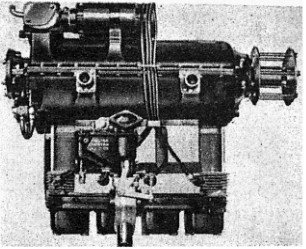
“Walter Mikron”
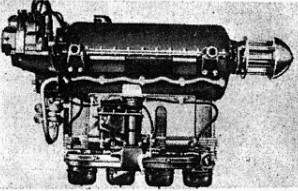
“Walter Minor 4”
-1936. Major 6, inline 6-cylinder engine with 205 hp.
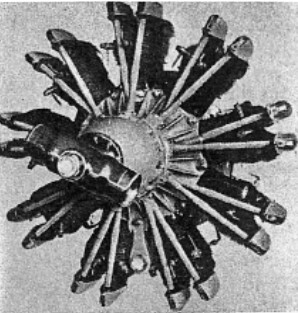
“Walter Super Castor”
-1936. The Super Castor with 450/480 hp. Radial 9-cylinder engine.
-1936. The Scolar with 180 hp.
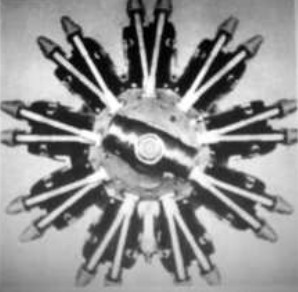
“Walter Scolar”
-1936. The Walter Merkur V-S2, a Bristol licensee of the Mercury.
-1937. The Sagitta I-MR, inverted V12 engine. With 600 hp at 2600 rpm.
-1938. The Minor 12 I-MR, with 390 hp.
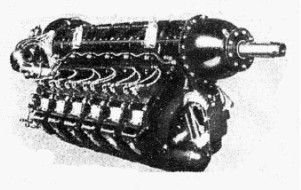
“Walter Sagitta”
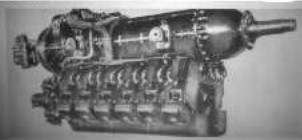
“Walter Minor 12 I-MR”
-A leap in time. Now, our contributor Evzen from Prague has sent us some photos from the Brno Museum of a surprising Walter engine, which he indicates is a prototype of the Walter M-601B.
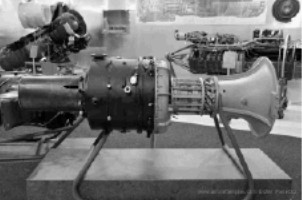
“The Brno Discovery”
-It certainly doesn't resemble it at all, as the architecture is completely different. A new verification has been requested to confirm whether it is a test of engine components arranged differently. Although that doesn't seem to be the case either.
-Clearly a direct-flow engine, while the definitive Walter M-601B is a reverse-flow engine. It has a front power outlet, a shaft with a coupling for a test bench brake?
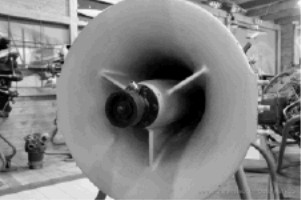
“Inlet and Outlet Shaft”
-This engine has completely baffled the author of this post. The long bell leads to variable-incidence guide vanes: perhaps to determine the optimal angle.
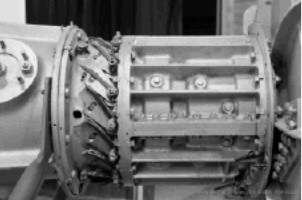
"Detail of the axial compressor and moving vanes"
-Due to the annular chamber type and the reverse flow before the gas flow is redirected, the centrifugal compressor is assumed to be located immediately after the axial compressor.
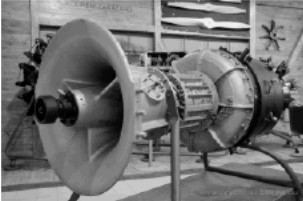
“Another perspective of the prototype engine”

“Final appearance of the M-601B”
From Appendix 10: Engines of this make are located at museums and photographed for use in future reissues, to add to or replace them with improved versions.

“One of the First Walters” (PeT)
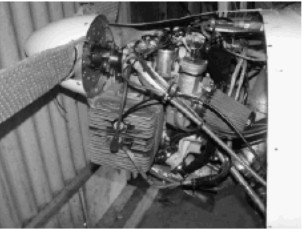
“Walter M-202 Series”
-The M-202 is a twin-cylinder boxer engine with a mechanical reduction gear and is the one shown in the previous photo. See main text.
-Below are two photos of the Walter NZ-60 and NZ-120. These can also be used as replacements in the main text if necessary.
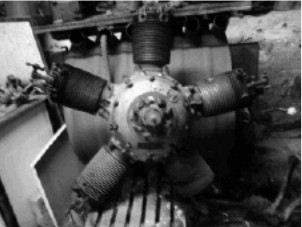
“NZ-60”
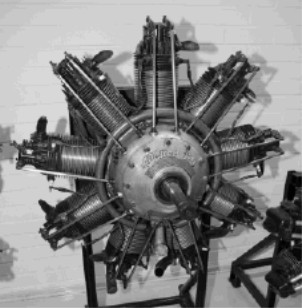
“Walter NZ-120”
From Appendix 12: Joseph Walter made this boxer engine, model “A”. Possibly for aviation. With 18.4 kW at 2,500 rpm and a weight of 26 kg.
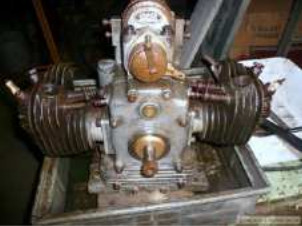
“Walter Twin-Cylinder Boxer” (PeT)
- 18.4 hp vertical inline twin-cylinder engine. It has dual magneto ignition. Model “A”.
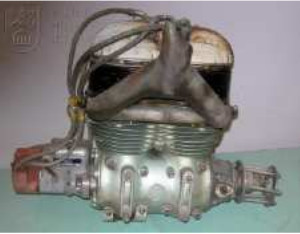
“Walter A, in Prague” (PeT)
- And the installation of a Walter A, on a sailboat as an example of its use, a 2-stroke engine mounted inverted.
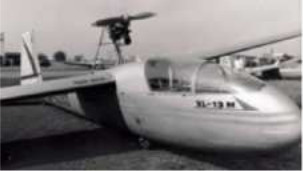
“On a Czech Blanik Glider”
- A small self-contained compressor for onboard installation to provide pressure for the reserve tank for starting the engines and/or wheel brakes.
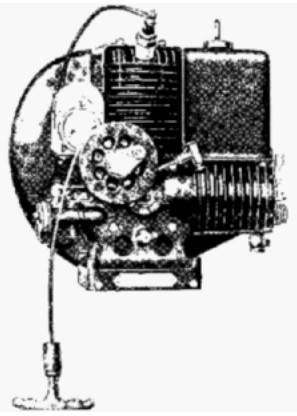
“Auxiliary Onboard Compressor”

“Walter Atom and Mikron”
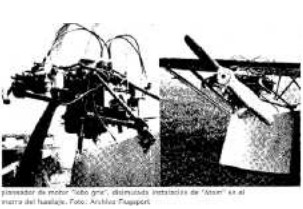
“Two Views of an Atom Installation"
And a Walter NZ-40 three-cylinder radial engine, in a clearer photograph,
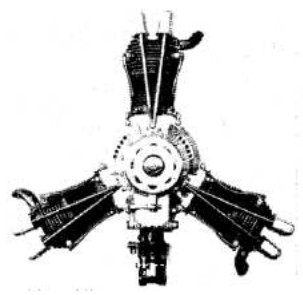
“Walter NZ-40”
The radial engine with the front magnetos is undoubtedly a Walter Castor, but the power output listed in "Flugsport" magazine seems low. The main article starts with 250 hp and goes on to discuss higher power levels in the Super Castor. Other sources give figures of up to 400 hp.
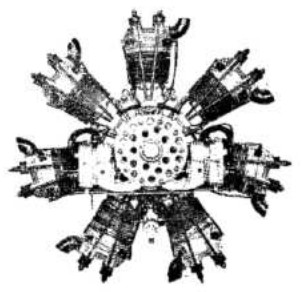
"Walter Castor"
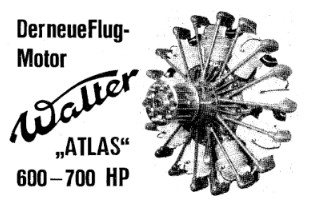
“Walter Atlas ad”
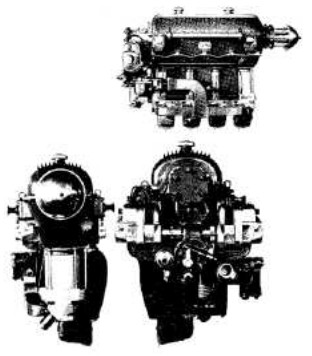
“Three Views of the Walter Junior”
- The initials NZ refer to Novak Zeithammer.
- At the end of World War II, it was taken over (June 1, 1946) as LET and nationalized on January 1, 1948, under the name Letecke Zavody National Enterprise.
“Walter logo”
- On July 26 of the following year, in 1949, it joined the Motorlet group for international sales.
“Motorlet logo”
- Interestingly, the logos of both brands, Walter and Motorlet, are similar; rotating the W makes an M, and rotating the M makes a W.
- Later, it would revert to the name Walter and was eventually acquired by the American company General Electric
We've obtained a new photo of the Walter six-cylinder horizontally opposed aircraft engine.
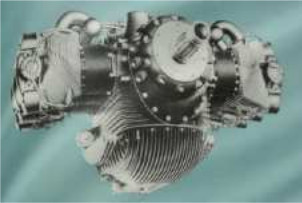
"Walter engine, truly beautiful"
Motores de WALTER ENGINES
Model: AI-14bis, -VF. (M-460)
Arquitecture:
Cooling:
Total Displacement:
Bore / Stroke: x
Power:
Weight:
Model: AI-25TL (Walter Titan)
Arquitecture:
Cooling:
Total Displacement:
Bore / Stroke: x
Power:
Weight:
Model: AS-82V
Arquitecture:
Cooling:
Total Displacement:
Bore / Stroke: x
Power:
Weight:
Model: Atlas
Arquitecture:
Cooling:
Total Displacement:
Bore / Stroke: x
Power:
Weight:
Model: Atom
Arquitecture:
Cooling:
Total Displacement:
Bore / Stroke: x
Power:
Weight:
Model: ”A” 18’4 kW
Arquitecture:
Cooling:
Total Displacement:
Bore / Stroke: x
Power:
Weight:
Model: BMW-IIIa (Lic.)
Arquitecture:
Cooling:
Total Displacement:
Bore / Stroke: x
Power:
Weight:
Model: BMW-IV (Lic.) (Walter W-IV)
Arquitecture:
Cooling:
Total Displacement:
Bore / Stroke: x
Power:
Weight:
Model: Bora, -II-R
Arquitecture:
Cooling:
Total Displacement:
Bore / Stroke: x
Power:
Weight:
Model: Castor
Arquitecture:
Cooling:
Total Displacement:
Bore / Stroke: x
Power:
Weight:
Model: DH Gipsy (Lic.)
Arquitecture:
Cooling:
Total Displacement:
Bore / Stroke: x
Power:
Weight:
Model: DR-Doris
Arquitecture:
Cooling:
Total Displacement:
Bore / Stroke: x
Power:
Weight:
Model: Gemma
Arquitecture:
Cooling:
Total Displacement:
Bore / Stroke: x
Power:
Weight:
Model: Junior
Arquitecture:
Cooling:
Total Displacement:
Bore / Stroke: x
Power:
Weight:
Model: Jupiter, IV, VI (Lic. G-R/Bristol)
Arquitecture:
Cooling:
Total Displacement:
Bore / Stroke: x
Power:
Weight:
Model: K-14-I
Arquitecture:
Cooling:
Total Displacement:
Bore / Stroke: x
Power:
Weight:
Model: M-01
Arquitecture:
Cooling:
Total Displacement:
Bore / Stroke: x
Power:
Weight:
Model: M-05 (RD-45 Lic.)
Arquitecture:
Cooling:
Total Displacement:
Bore / Stroke: x
Power:
Weight:
Model: M-06 (VK-1 Lic.)
Arquitecture:
Cooling:
Total Displacement:
Bore / Stroke: x
Power:
Weight:
Model: M-107
Arquitecture:
Cooling:
Total Displacement:
Bore / Stroke: x
Power:
Weight:
Model: M-108H
Arquitecture:
Cooling:
Total Displacement:
Bore / Stroke: x
Power:
Weight:
Model: M-110H
Arquitecture:
Cooling:
Total Displacement:
Bore / Stroke: x
Power:
Weight:
Model: M-132
Arquitecture:
Cooling:
Total Displacement:
Bore / Stroke: x
Power:
Weight:
Model: M-137
Arquitecture:
Cooling:
Total Displacement:
Bore / Stroke: x
Power:
Weight:
Model: M-202
Arquitecture:
Cooling:
Total Displacement:
Bore / Stroke: x
Power:
Weight:
Model: M-208
Arquitecture:
Cooling:
Total Displacement:
Bore / Stroke: x
Power:
Weight:
Model: M-21
Arquitecture:
Cooling:
Total Displacement:
Bore / Stroke: x
Power:
Weight:
Model: M-332
Arquitecture:
Cooling:
Total Displacement:
Bore / Stroke: x
Power:
Weight:
Model: M-337
Arquitecture:
Cooling:
Total Displacement:
Bore / Stroke: x
Power:
Weight:
Model: M-462
Arquitecture:
Cooling:
Total Displacement:
Bore / Stroke: x
Power:
Weight:
Model: M-601, b
Arquitecture:
Compressor/s:
Combustion chambers:
Turbines:
Power / Thrust:
Weight:
Model: M-602
Arquitecture:
Compressor/s:
Combustion chambers:
Turbines:
Power / Thrust:
Weight:
Model: M-701
Arquitecture:
Compressor/s:
Combustion chambers:
Turbines:
Power / Thrust:
Weight:
Model: Major, -4, -6
Arquitecture:
Cooling:
Total Displacement:
Bore / Stroke: x
Power:
Weight:
Model: Mars (Lic.)
Arquitecture:
Cooling:
Total Displacement:
Bore / Stroke: x
Power:
Weight:
Model: MC-101
Arquitecture:
Cooling:
Total Displacement:
Bore / Stroke: x
Power:
Weight:
Model: Merkur V-S 2
Arquitecture:
Cooling:
Total Displacement:
Bore / Stroke: x
Power:
Weight:
Model: Mikron, -II
Arquitecture:
Cooling:
Total Displacement:
Bore / Stroke: x
Power:
Weight:
Model: Minor, -4, -6, -12 I-MR
Arquitecture:
Cooling:
Total Displacement:
Bore / Stroke: x
Power:
Weight:
Model: MW IV Alta compresion (Lic.) (W-300)
Arquitecture:
Cooling:
Total Displacement:
Bore / Stroke: x
Power:
Weight:
Model: NZ-120
Arquitecture:
Cooling:
Total Displacement:
Bore / Stroke: x
Power:
Weight:
Model: NZ-40
Arquitecture:
Cooling:
Total Displacement:
Bore / Stroke: x
Power:
Weight:
Model: NZ-60
Arquitecture:
Cooling:
Total Displacement:
Bore / Stroke: x
Power:
Weight:
Model: NZ-70
Arquitecture:
Cooling:
Total Displacement:
Bore / Stroke: x
Power:
Weight:
Model: NZ-85
Arquitecture:
Cooling:
Total Displacement:
Bore / Stroke: x
Power:
Weight:
Model: Packard Diesel (Lic.)
Arquitecture:
Cooling:
Total Displacement:
Bore / Stroke: x
Power:
Weight:
Model: Palasis
Arquitecture:
Cooling:
Total Displacement:
Bore / Stroke: x
Power:
Weight:
Model: Pegas II-M2
Arquitecture:
Cooling:
Total Displacement:
Bore / Stroke: x
Power:
Weight:
Model: Pobjoy R (Walter Mira) (Lic.)
Arquitecture:
Cooling:
Total Displacement:
Bore / Stroke: x
Power:
Weight:
Model: Polaris I y II
Arquitecture:
Cooling:
Total Displacement:
Bore / Stroke: x
Power:
Weight:
Model: Pollux, II-R
Arquitecture:
Cooling:
Total Displacement:
Bore / Stroke: x
Power:
Weight:
Model: Prototipo at Brno
Arquitecture:
Cooling:
Total Displacement:
Bore / Stroke: x
Power:
Weight:
Model: Regulus
Arquitecture:
Cooling:
Total Displacement:
Bore / Stroke: x
Power:
Weight:
Model: Sagitta, I-MR
Arquitecture:
Cooling:
Total Displacement:
Bore / Stroke: x
Power:
Weight:
Model: Scolar
Arquitecture:
Cooling:
Total Displacement:
Bore / Stroke: x
Power:
Weight:
Model: small compressor group
Arquitecture:
Cooling:
Total Displacement:
Bore / Stroke: x
Power:
Weight:
Model: Super Castor
Arquitecture:
Cooling:
Total Displacement:
Bore / Stroke: x
Power:
Weight:
Model: Trojan
Arquitecture:
Cooling:
Total Displacement:
Bore / Stroke: x
Power:
Weight:
Model: Vega
Arquitecture:
Cooling:
Total Displacement:
Bore / Stroke: x
Power:
Weight:
Model: Venus
Arquitecture:
Cooling:
Total Displacement:
Bore / Stroke: x
Power:
Weight:
Model: W-300
Arquitecture:
Cooling:
Total Displacement:
Bore / Stroke: x
Power:
Weight:
Model: W-IIIA
Arquitecture:
Cooling:
Total Displacement:
Bore / Stroke: x
Power:
Weight:
Model: W-IV, V8-230HP
Arquitecture:
Cooling:
Total Displacement:
Bore / Stroke: x
Power:
Weight:
Model: W-V
Arquitecture:
Cooling:
Total Displacement:
Bore / Stroke: x
Power:
Weight:
Model: W-VI
Arquitecture:
Cooling:
Total Displacement:
Bore / Stroke: x
Power:
Weight:
Model: W-VII R
Arquitecture:
Cooling:
Total Displacement:
Bore / Stroke: x
Power:
Weight:
Model: W-VIII
Arquitecture:
Cooling:
Total Displacement:
Bore / Stroke: x
Power:
Weight: